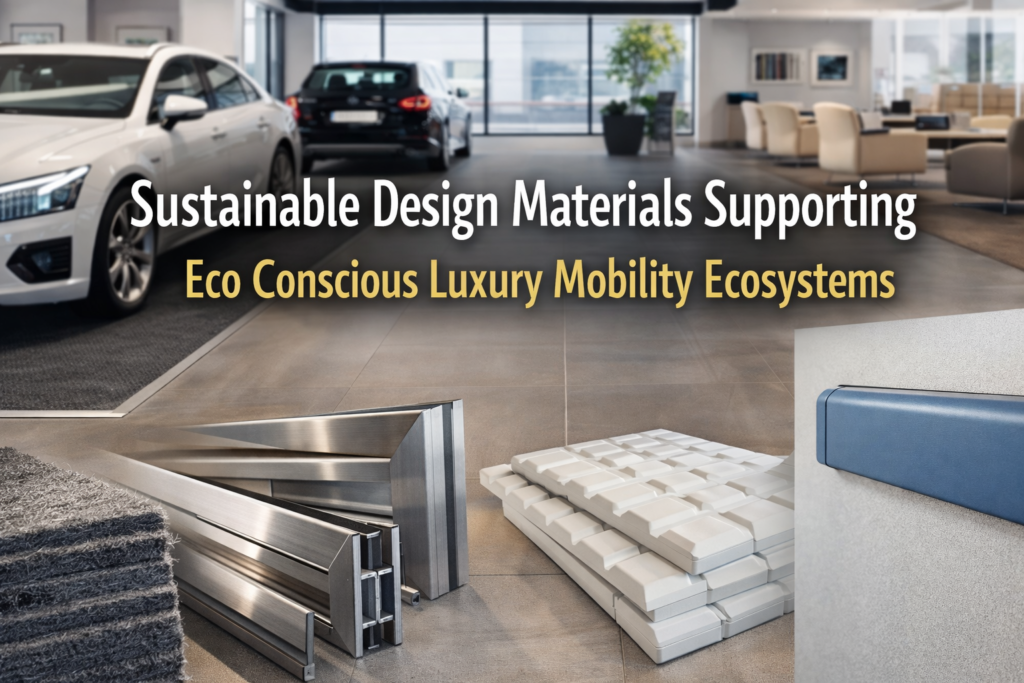
Sustainable Design Materials Supporting Eco Conscious Luxury Mobility Ecosystems
Sustainability has become a defining priority across modern industries, including construction, interior design, and the luxury mobility sector. As premium facilities evolve, materials supplied by mat aluminium suppliers in uae play an increasingly important role in reducing environmental impact while supporting durability, efficiency, and long-term performance. These choices influence how responsibly high-end environments are designed, operated, and maintained over time.
For beginners learning about sustainability, professionals managing facilities, business owners investing in premium spaces, and developers designing future-ready infrastructure, understanding how eco-friendly materials contribute to sustainable ecosystems is increasingly valuable.
Sustainability Beyond Vehicles: The Built Environment Perspective
While much attention in the luxury car rental industry focuses on fuel efficiency and electric fleets, physical spaces such as showrooms, service centers, and customer lounges also influence sustainability outcomes. Flooring systems, wall protection, acoustic solutions, and structural frames affect energy efficiency, durability, and lifecycle costs.
Environmentally responsible material selection reduces waste, improves indoor comfort, and supports operational efficiency across mobility-focused facilities.
Durable Aluminium Systems and Sustainable Design
Aluminium has gained prominence due to its recyclability, durability, and low maintenance requirements. In commercial interiors and high-traffic environments, aluminium-based systems offer long service life with minimal resource replacement.
In the UAE, demand for mat aluminium suppliers in uae has grown as developers seek entrance and flooring solutions that withstand heavy usage while remaining environmentally efficient. Aluminium mats reduce dust transfer, lower cleaning water consumption, and extend interior flooring lifespan.
Similarly, working with an Indoor Aluminium Frame Supplier Dubai supports sustainable construction by enabling modular designs. Modular aluminium frames allow:
- Easy disassembly and reuse
- Reduced material waste during renovations
- Long-term adaptability of interior layouts
These benefits align well with premium mobility spaces that frequently update layouts to match evolving brand standards.
Acoustic Comfort as a Sustainability Strategy
Acoustic comfort is often overlooked in sustainability discussions, yet it directly affects energy use and occupant well-being. Effective sound management reduces the need for excessive mechanical noise control systems.
Materials such as Acoustic Design panels including 3D panels improve sound absorption while enhancing aesthetics. In luxury mobility environments, these panels create calm, premium atmospheres without relying on energy-intensive solutions.
In regions where mixed-use developments are common, Soundproofing Felt panels Abu Dhabi are increasingly applied in service centers and offices. These panels are often manufactured from recycled fibers, contributing to circular material use while delivering measurable acoustic performance.
Key sustainability advantages include:
- Improved indoor environmental quality
- Reduced reliance on active noise-control technologies
- Use of recycled or low-impact raw materials
Wall Protection and Lifecycle Efficiency
High-traffic facilities experience frequent wall damage, leading to repairs, repainting, and material replacement. These activities increase waste and ongoing resource consumption.
Installing protective systems such as solutions from a pvc wall guard supplier Abu Dhabi addresses this challenge. Modern PVC wall guards are designed for durability and longevity, reducing the frequency of maintenance interventions.
From a sustainability standpoint, effective wall protection offers:
- Extended wall surface lifespan
- Reduced material disposal over time
- Lower maintenance-related energy and labor usage
In luxury car rental environments where visual standards are critical, these systems help maintain appearance without recurring refurbishment.
Integrating Sustainable Materials into Luxury Mobility Spaces
Sustainability becomes most effective when materials are selected as part of a holistic strategy rather than isolated upgrades. In mobility-focused developments, coordination between architects, interior designers, and facility managers ensures consistent outcomes.
Practical integration strategies include:
- Combining aluminium flooring systems with acoustic wall solutions
- Selecting modular components for future adaptability
- Prioritizing materials with documented lifecycle benefits
These approaches support both environmental goals and long-term cost efficiency.
Real-World Application in Premium Facilities
Across the UAE, premium service environments increasingly reflect sustainability principles through material choices. Showrooms and customer lounges associated with luxury mobility brands demonstrate how responsible design enhances user experience without compromising performance.
Examples include:
- Aluminium entrance systems that reduce indoor air contamination
- Acoustic panels that improve comfort in customer waiting areas
- Protective wall systems that preserve interior finishes over time
Such applications illustrate how sustainability and luxury can coexist when informed decisions guide material selection.
Opportunities for Internal Knowledge Expansion
For readers seeking deeper understanding, internal resources can enhance learning. Relevant internal content opportunities may include:
- Guides on sustainable interior material selection
- Case studies on acoustic design in commercial spaces
- Articles on lifecycle cost analysis for architectural products
These topics naturally complement discussions around sustainable infrastructure.
Related posts