
How Adhesive Bonding Improves Acoustic and Architectural Material Performance
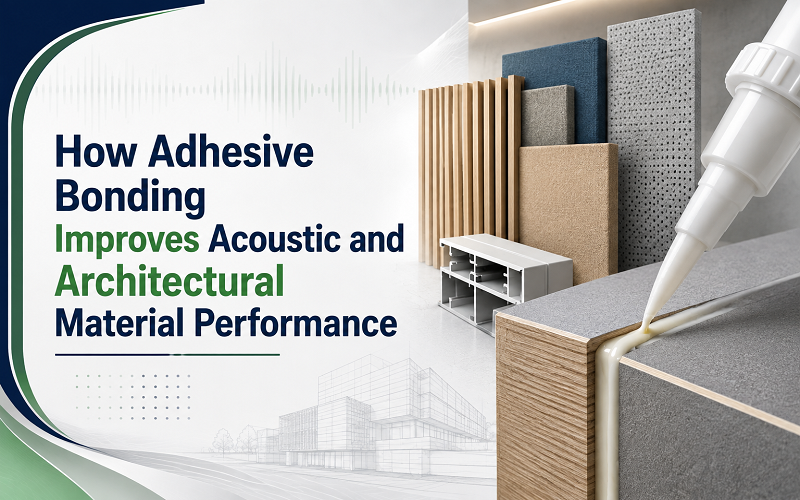
Modern construction and interior projects increasingly depend on materials that combine durability, precision, acoustic performance, and efficient installation. From aluminium entrance systems and PVC profiles to fabric acoustic panels, the way individual components are joined can significantly influence the final performance of a system. Adhesive Bonding Technology has therefore become an important technique across manufacturing and construction applications.
For architects, contractors, manufacturers, and business owners, understanding the Adhesive Bonding Process can help improve material compatibility, product reliability, and installation quality.
Understanding Adhesive Bonding Technology
Adhesive bonding uses a specially formulated adhesive to join two or more surfaces without relying exclusively on mechanical fasteners such as screws, bolts, or rivets. Unlike point-based mechanical connections, adhesives can distribute loads across a larger bonding area.
The technique can be particularly useful when working with different materials, including plastics, metals, composites, and acoustic components. Properly selected adhesives can also accommodate limited movement, reduce vibration, and create visually cleaner joints.
Key Factors in Adhesive Bonding
A successful bonding application depends on several technical considerations:
- Surface cleanliness and preparation
- Compatibility between the joining materials
- Adhesive selection and curing characteristics
- Temperature and humidity during application
- Required bond strength and expected loads
- Long-term exposure to moisture, chemicals, and movement
These factors are especially important in the UAE, where high temperatures and humidity can affect material performance.
Adhesive Bonding Manufacturing for Modern Applications
Adhesive Bonding Manufacturing involves integrating bonding technology into a controlled production environment. This approach can improve consistency because surface preparation, adhesive application, pressure, curing time, and inspection can be standardized.
For manufacturers, the process can offer several practical benefits:
- Improved appearance: Adhesives can produce clean, concealed joints.
- Material flexibility: Different substrates can sometimes be joined without drilling or damaging them.
- Stress distribution: Loads can be distributed over a broader surface area.
- Vibration control: Certain adhesive systems can help dampen vibration.
- Production efficiency: Automated or standardized application can support repeatable manufacturing.
The choice of adhesive should always be based on the substrate, operating environment, required strength, and expected service life.
Adhesive Bonding Of Plastics and PVC Profiles
Adhesive Bonding Of Plastics requires careful attention because plastics can have different surface-energy characteristics and chemical compositions. PVC, for example, is widely used for wall protection, edge finishing, and architectural profiles because of its durability, moisture resistance, and low-maintenance characteristics.
A PVC profiles supplier in UAE must consider the intended application when recommending profiles and joining methods. Before bonding, surfaces should generally be clean, dry, and free from dust, grease, and other contaminants. Depending on the adhesive system, primers or surface-activation techniques may also be required.
Acoustic Materials and Sound Control
Material selection and installation methods also influence acoustic environments. Sound Proofing Fabric Panels Dubai projects commonly require panels that absorb unwanted sound, reduce reverberation, and improve speech clarity. Fabric-wrapped acoustic panels are used in offices, educational facilities, hospitality spaces, healthcare environments, and other interiors where acoustic comfort is important.
Bonding methods may support the installation or assembly of acoustic components, but acoustic performance ultimately depends on factors such as panel thickness, density, coverage, room geometry, and installation configuration.
Aluminium Frames and Architectural Finishes
Aluminium systems are another area where accurate fabrication and reliable joining methods matter. An Aluminium Frame Supplier Sharjah may provide framed entrance systems where aluminium profiles work with inserts such as carpet, brushes, or plastic components. These systems can help trap dirt and moisture at building entrances while supporting a durable architectural finish.
Best Practices for Material Joining
Before selecting a bonding method, project teams should:
- Identify all substrate materials.
- Review environmental exposure.
- Define mechanical and acoustic requirements.
- Test adhesive compatibility on representative samples.
- Follow manufacturer curing and application specifications.
- Inspect finished joints for defects and consistency.
FAQs
What is the Adhesive Bonding Process?
It is a method of joining materials using an adhesive that forms a bond between prepared surfaces.
Can adhesives bond PVC materials?
Yes, suitable adhesive systems can be used for PVC, provided the adhesive and surface preparation are compatible with the specific application.
Why is surface preparation important?
Cleaning and preparing surfaces removes contaminants that can reduce adhesion and compromise long-term bond strength.
Are adhesive joints suitable for acoustic applications?
They can be useful for assembling or installing acoustic components, although overall acoustic performance depends on the complete system design.
How should adhesive selection be made?
Selection should consider substrate type, temperature, humidity, movement, loading conditions, curing requirements, and expected service life.
Related posts