Choosing Efficient Water Chiller Systems for UAE Industrial Applications
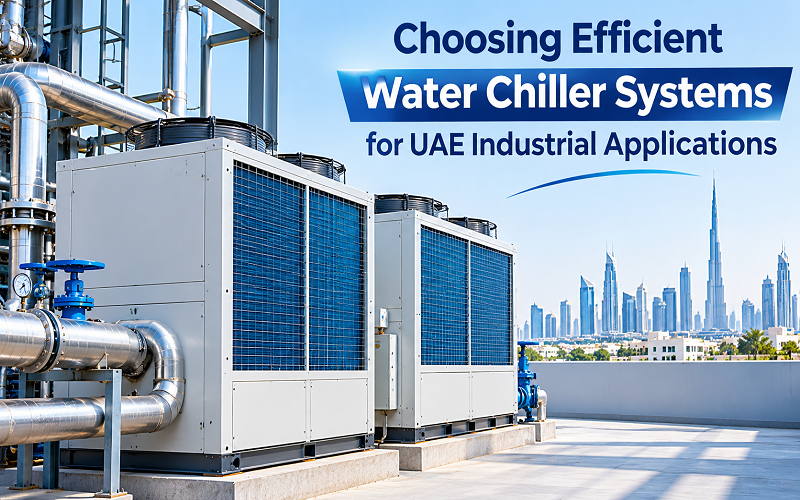
Temperature control plays an important role in commercial buildings, manufacturing facilities, food processing units, and industrial operations. Many businesses depend on reliable cooling equipment to maintain production quality, protect machinery, and create suitable operating conditions. Water chillers provide a practical solution by removing heat from water or another circulating fluid and delivering controlled cooling to connected equipment.
In the UAE, selecting an appropriate cooling system requires additional consideration because of high outdoor temperatures, dust exposure, and demanding operating conditions. Whether a facility requires cooling for a production line or a commercial application, understanding chiller technology helps businesses make informed equipment decisions.
Understanding How a Water Chiller System Works
A water chiller operates through a refrigeration cycle that transfers heat from circulating water to another medium, usually air or cooling water. The cooled water is then distributed through pipes to the equipment or areas that require temperature control.
Most water chiller systems contain four essential components:
- Compressor: Circulates and compresses refrigerant to maintain the refrigeration cycle.
- Condenser: Releases heat absorbed from the circulating water.
- Expansion valve: Regulates refrigerant flow and reduces its pressure.
- Evaporator: Transfers heat from the water into the refrigerant, producing chilled water.
These components work together to maintain the required water temperature. Depending on the application, chillers can support air conditioning, manufacturing processes, industrial machinery, and specialist cooling requirements.
Water Chiller System in UAE: Choosing the Right Technology
Selecting a suitable water chiller system in UAE requires an understanding of the building environment, cooling demand, and operational requirements. Air-cooled and water-cooled chillers are two commonly used configurations, each offering different advantages.
Air-Cooled Water Chillers
Air-cooled chillers use ambient air to remove heat from the refrigerant through condenser coils and fans. They do not require a separate cooling tower, making them suitable for installations where water availability or space is limited.
Common applications include:
- Small and medium-sized commercial buildings.
- Offices and retail establishments.
- Industrial facilities with moderate cooling requirements.
- Locations where cooling tower installation is impractical.
However, outdoor temperature can influence their performance. In the UAE, equipment selection should account for high ambient temperatures and the manufacturer’s specified operating limits.
Water-Cooled Chillers
Water-cooled chillers use water circulating through a condenser, usually connected to a cooling tower, to remove heat from the refrigeration cycle.
These systems are frequently considered for larger facilities with substantial and relatively continuous cooling requirements.
Their selection should account for cooling tower capacity, water treatment, pump requirements, available installation space, and ongoing maintenance.
Small Water Chiller Dubai: Applications and Selection Factors
Not every business requires a large industrial cooling installation. Smaller facilities and specialised operations may need compact equipment capable of delivering controlled cooling without occupying excessive space.
A Small water chiller Dubai installation can be suitable for laboratory equipment, commercial machinery, small manufacturing processes, and specialised cooling applications.
Important Factors When Selecting a Small Chiller
Cooling capacity: Determine the actual heat generated by the equipment or process. Capacity should be calculated according to the required heat removal rather than estimated from equipment size alone.
Temperature requirements: Different applications require different water temperatures. Check the acceptable operating range before selecting a unit.
Flow rate: The system must provide sufficient water circulation to maintain consistent cooling throughout the process.
Installation space: Consider equipment dimensions, ventilation clearance, piping arrangements, and access for maintenance.
Noise levels: For commercial and indoor applications, compressor and fan noise may influence equipment placement.
Compact systems can provide effective cooling when their specifications match the intended application.
Industrial Water Chiller Manufacturers: What Businesses Should Evaluate
Choosing equipment from experienced Industrial water chiller manufacturers involves more than comparing cooling capacities and purchase prices. Businesses should evaluate technical specifications, component quality, operating efficiency, and long-term maintenance requirements.
Before selecting an industrial system, consider the following:
- Operating conditions: Confirm that the equipment can operate under the expected outdoor temperatures and site conditions.
- Energy efficiency: Compare performance ratings under the actual design conditions rather than relying only on general efficiency claims.
- Compressor technology: Select a compressor suited to the cooling capacity and operating cycle.
- Control systems: Modern controllers can help monitor temperatures, operating conditions, and equipment performance.
- Maintenance access: Ensure that important components can be inspected and serviced without unnecessary operational disruption.
- Future requirements: Consider whether production expansion could increase the facility’s cooling demand.
Correct equipment sizing is particularly important. An undersized chiller may struggle to maintain the required temperature, while an oversized system can increase capital costs and create inefficient operating conditions.
Maintenance Practices for Reliable Chiller Performance
Regular maintenance helps preserve cooling efficiency, identify developing faults, and reduce unexpected equipment downtime.
A practical maintenance programme should include:
- Cleaning condenser coils and checking heat transfer surfaces.
- Inspecting refrigerant levels and identifying possible leakage.
- Checking pumps, motors, electrical connections, and control systems.
- Monitoring water quality and cleaning filters.
- Inspecting pipes, insulation, and valves for damage.
- Reviewing operating temperatures, pressures, and energy consumption.
Maintenance frequency should follow the manufacturer’s recommendations and reflect operating hours, environmental exposure, and system design.
Conclusion
Water chillers support temperature control across commercial buildings, specialised facilities, and industrial operations. Selecting the right system requires careful consideration of cooling capacity, operating conditions, energy efficiency, installation requirements, and maintenance needs.
From compact cooling equipment to larger industrial installations, a properly specified system can help maintain process stability and protect valuable equipment. Businesses that evaluate their actual cooling requirements before purchasing can make more informed decisions and improve long-term operational reliability.
Frequently Asked Questions
- What is the main purpose of a water chiller system?
A water chiller removes heat from circulating water or another fluid to provide controlled cooling for machinery, industrial processes, commercial buildings, and specialist equipment.
- What is the difference between air-cooled and water-cooled chillers?
Air-cooled chillers use ambient air to remove heat, whereas water-cooled chillers use circulating condenser water, generally supported by a cooling tower. Their suitability depends on capacity, site conditions, water availability, and operating costs.
- Where are small water chillers commonly used in Dubai?
Small water chillers are used in laboratories, commercial equipment, specialised machinery, small manufacturing operations, and other applications requiring controlled cooling.
- How do I calculate the required industrial chiller capacity?
Capacity is determined by the heat load, water flow rate, and required temperature difference. For water, a commonly used calculation is Q = mass flow rate × specific heat capacity × temperature difference. A qualified engineer should verify the design requirements.
- How often should an industrial water chiller be serviced?
Service frequency depends on the equipment design, operating hours, and environmental conditions. Regular inspections, cleaning, water quality checks, and manufacturer-recommended preventive maintenance help maintain reliable performance.
Related posts