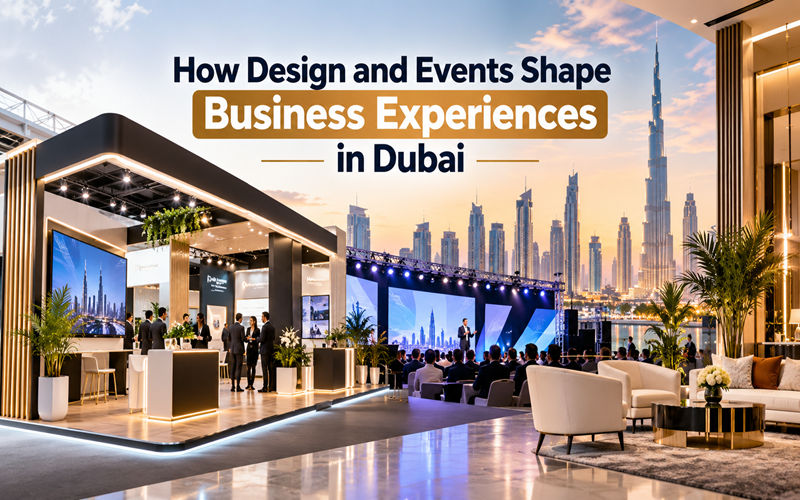
How Design and Events Shape Business Experiences in Dubai
Dubai has become an important destination for business networking, exhibitions, product showcases, and corporate gatherings. In this competitive environment, the design of a physical space plays a significant role in how visitors perceive a brand, interact with products, and remember an event. Combining thoughtful interior planning with effective event execution helps businesses create professional environments that support communication and engagement.
Understanding the relationship between interior design Dubai, corporate events, and exhibition planning allows business owners and event professionals to make informed decisions about their spaces and experiences.
- The Role of Interior Design Dubai in Business Environments
Commercial interior design extends beyond visual appearance. It involves planning layouts, selecting materials, managing lighting, and organising spaces to support specific business objectives.
Offices, showrooms, exhibition areas, and event venues require different design approaches. For example, a corporate office may prioritise productivity and collaboration, while a product showroom needs clear circulation and effective product presentation.
Key Elements of Effective Commercial Design
When planning a commercial environment, consider:
- Space planning: Arrange furniture, displays, and walkways to support comfortable movement.
- Lighting: Use appropriate lighting to improve visibility and highlight important features.
- Materials and finishes: Select durable materials suited to the space’s purpose and maintenance requirements.
- Brand consistency: Apply colours, graphics, and visual elements that align with the company’s identity.
- Accessibility: Ensure visitors can navigate the environment safely and comfortably.
A well-planned interior creates a functional setting while communicating professionalism through consistent design choices.
- Planning Successful Corporate Events Dubai
Corporate events serve several purposes, including employee engagement, networking, stakeholder communication, training, and business development. Successful planning begins with clearly defined objectives rather than selecting a venue or theme first.
Businesses organising corporate events Dubai should consider the audience, event format, expected attendance, budget, and logistical requirements before finalising the arrangements.
Essential Event Planning Considerations
A structured planning process typically includes:
- Define the objective: Establish whether the event focuses on networking, education, celebration, or product awareness.
- Understand the audience: Consider attendee expectations, accessibility needs, and preferred event formats.
- Select a suitable venue: Evaluate capacity, location, technical facilities, and visitor flow.
- Coordinate suppliers: Establish responsibilities for staging, lighting, audiovisual equipment, catering, and registration.
- Measure performance: Use attendance figures, participant feedback, and engagement indicators to assess outcomes.
Clear timelines and communication between stakeholders help reduce operational issues and improve the attendee experience.
- Choosing Corporate Event Companies in Dubai
Businesses evaluating corporate event companies in Dubai should assess their planning capabilities, technical knowledge, communication processes, and experience with comparable event formats.
A reliable evaluation process should focus on more than creative concepts. Organisers also need to understand how an event team manages schedules, suppliers, safety considerations, and unexpected changes.
Before making a decision, review the following:
- Previous projects with similar objectives and audience sizes.
- The proposed event schedule and allocation of responsibilities.
- Budget transparency and potential additional costs.
- Technical production requirements and contingency arrangements.
- Communication procedures before, during, and after the event.
A clearly documented brief helps businesses compare proposals fairly and ensures that all parties understand the expected deliverables.
- Creating Impactful Product Launch Activation UAE Experiences
A product launch activation UAE project requires coordination between brand messaging, physical design, product demonstrations, and audience interaction. The goal is to introduce a product in a setting where attendees can understand its features and intended value.
Effective activations often combine a central product display with demonstration areas, informational graphics, interactive experiences, and designated networking spaces.
Practical Design Strategies
- Place the product where visitors can view it without obstructing circulation.
- Use concise messaging to communicate essential product information.
- Provide sufficient space for demonstrations and questions.
- Integrate lighting and audiovisual elements where they support the presentation.
- Plan registration, crowd movement, and equipment access in advance.
The experience should remain consistent with the product’s positioning while prioritising visitor comfort, clarity, and operational efficiency.
- Working With an Exhibition Stand Contractor in UAE
Exhibition stands are temporary branded environments that must balance visual communication with practical construction requirements. An experienced exhibition stand contractor in UAE can help translate a design concept into a buildable structure that meets venue specifications.
The process generally involves concept development, technical drawings, material selection, fabrication, installation, and dismantling.
Businesses should confirm stand dimensions, venue regulations, electrical requirements, structural considerations, and installation deadlines before production begins. Storage requirements and the potential reuse of modular components should also be considered when evaluating costs and sustainability.
Early coordination between designers, contractors, and event organisers helps minimise last-minute changes and supports a smoother installation process.
Frequently Asked Questions
- Why is interior design important for commercial spaces?
It improves space utilisation, visitor movement, functionality, and the consistency of a company’s visual identity.
- What should businesses consider when planning corporate events in Dubai?
Key factors include objectives, audience size, venue suitability, budget, supplier coordination, accessibility, and contingency planning.
- How can businesses evaluate corporate event companies in Dubai?
Compare relevant experience, project timelines, cost breakdowns, communication practices, and operational planning.
- What makes a product launch activation effective?
Clear product messaging, accessible demonstrations, purposeful design, and smooth visitor flow contribute to a meaningful launch experience.
- What should an exhibition stand contractor in UAE manage?
Typical responsibilities include technical planning, fabrication, venue compliance, installation, and dismantling, depending on the agreed project scope.
Conclusion
Effective commercial design and event planning require a balance between creativity, functionality, and operational discipline. From interior layouts to product activations and exhibition stands, careful preparation helps businesses communicate clearly and create well-organised visitor experiences. Defining objectives early, coordinating stakeholders, and evaluating practical requirements are essential steps towards delivering successful business environments and events.
Related posts