Brake Pad Replacement in Dubai: What Every Driver Should
Dubai roads move fast, and so does the wear on your car. Between scorching summer heat, stop-and-go traffic on Sheikh Zayed Road, and long weekend drives to the mountains, your braking system takes a beating most drivers never think about — until that unmistakable squeal shows up at the worst possible moment.
That’s where a trusted name like Squaredealmotor comes in. Known for honest diagnostics and no-nonsense service, Squaredealmotor has become a go-to workshop for drivers who want their car fixed right the first time, without the upsell games some garages are famous for.
If you’ve been putting off that brake check, here’s everything you need to know about brake pad replacement in Dubai — how to spot the warning signs, what the process actually involves, and why timing matters more than most people realize.
Why Brakes Wear Out Faster in Dubai
It’s not your imagination — brake pads genuinely degrade quicker here than in cooler climates. The combination of high ambient temperatures and heavy traffic congestion means your braking system is constantly working overtime. Add in sand and dust that settle into the calipers, and you’ve got a recipe for accelerated wear.
Most manufacturers recommend inspecting brake pads every 15,000 to 20,000 km, but in local driving conditions, many workshops suggest checking closer to the 10,000 km mark.
Warning Signs You Shouldn’t Ignore
Your car usually tells you before your brakes fail completely. Watch out for:
- A high-pitched squeal when braking — this is often a built-in wear indicator doing its job
- Grinding or metallic scraping — a sign the pads are worn down to the metal backing
- A soft or spongy brake pedal — could mean worn pads or a deeper hydraulic issue
- Vibration through the steering wheel while braking
- Longer stopping distances than usual
- A visible brake warning light on your dashboard
If you notice even one of these, it’s time to book a proper inspection rather than hoping it resolves itself.
What Happens During a Professional Brake Pad Replacement
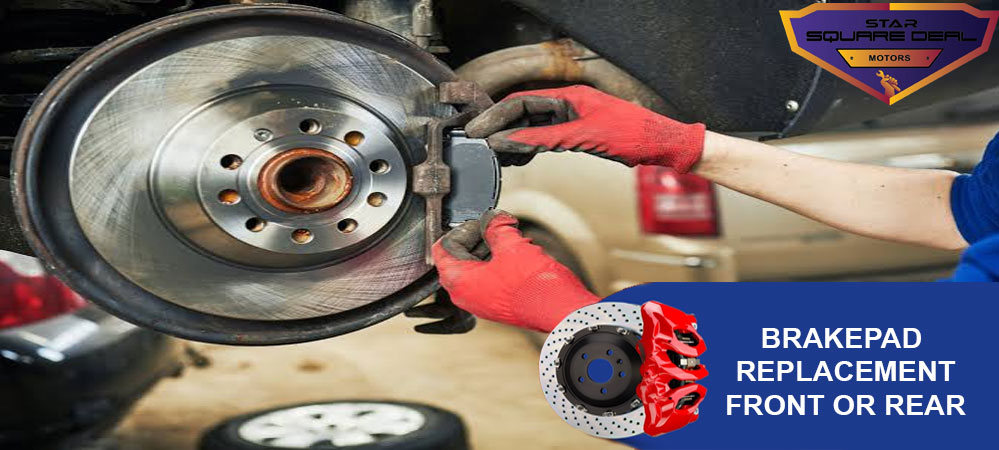
A reputable workshop won’t just slap on new pads and send you off. Here’s what a thorough job typically includes:
- Full visual inspection of pad thickness, rotor condition, and caliper function
- Measurement against manufacturer tolerances to confirm replacement is actually needed
- Removal of worn pads and cleaning of the caliper assembly
- Rotor resurfacing or replacement, if the discs are warped or scored
- Installation of new pads matched to your vehicle’s make and model
- Brake fluid check, since fluid quality directly affects braking performance
- Test drive to confirm smooth, even braking before handover
This is exactly the kind of detailed process customers mention when reviewing Squaredealmotor — a team that checks the whole system, not just the obvious part.
OEM vs Aftermarket Pads: Which Should You Choose?
This is a common question, and the honest answer is: it depends on your driving habits and budget.
- OEM (Original Equipment Manufacturer) pads match what came with your car from the factory. They’re a safe, predictable choice, especially for luxury or performance vehicles.
- Aftermarket pads can offer excellent performance at a lower price point, but quality varies significantly between brands.
A good workshop will walk you through the trade-offs rather than pushing whatever’s sitting on the shelf. That transparency is a big part of why people keep coming back for brake pad replacement in Dubai at workshops that prioritize the customer’s actual needs over a quick sale.
How Much Does It Cost?
Pricing varies depending on your car’s make, model, and whether rotors need attention too. Economy cars typically cost less to service than luxury or performance vehicles, where parts alone can be pricier. As a rule of thumb, getting a clear, itemized quote before any work begins is the best way to avoid surprises. Ask specifically whether the quote includes labor, parts, and fluid top-up — some places quote only the pads and add everything else later.
Why Timing Matters More Than You Think
Delaying a brake pad replacement doesn’t just risk your safety — it costs you more money down the line. Worn pads eventually damage the rotors, turning a simple pad swap into a full rotor replacement job. What could’ve been a quick, affordable fix becomes a much bigger repair bill.
This is one of the most practical reasons to treat brake maintenance proactively rather than reactively. A quick inspection every few months costs far less than repairing damage caused by neglect.
Choosing the Right Workshop
Not all garages are created equal. When you’re looking into brake pad replacement in Dubai, keep these points in mind:
- Ask if they show you the old, worn parts before disposal
- Confirm whether they use OEM or quality aftermarket parts
- Check if there’s a warranty on parts and labor
- Look for transparent, itemized pricing
- Read genuine customer reviews, not just star ratings
Workshops like Squaredealmotor have built a reputation on exactly these fundamentals — clear communication, fair pricing, and doing the job properly the first time.
Your brakes are not the place to cut corners. Whether you’re driving a compact hatchback around the city or a heavier SUV out to the desert on weekends, staying ahead of wear and tear keeps you — and everyone else on the road — safer. If it’s been a while since your last check, there’s no better time than now to get it looked at.
Frequently Asked Questions
- How often should I replace my brake pads in Dubai? Most drivers should have their pads checked every 10,000–15,000 km due to heat and traffic conditions, even though manufacturer guides often suggest longer intervals.
- What does it mean if my brakes squeal but the pads look fine? It could be dust buildup, glazing on the pad surface, or a wear indicator lightly touching the rotor. It’s worth a quick inspection rather than ignoring it.
- Can I drive with worn brake pads for a little longer? It’s not recommended. Once pads wear down to the metal, you risk damaging the rotors and significantly increasing stopping distance, which is a genuine safety hazard.
- Do I need to replace all four brake pads at once? Not necessarily — front and rear pads wear at different rates. A proper inspection will tell you whether one axle or both need attention.
- How long does a brake pad replacement take? For most vehicles, a straightforward pad replacement takes around 45 minutes to an hour, though it can take longer if rotors also need work.
- Is it cheaper to buy my own brake pads and have them installed? Not usually a good idea unless you’re certain of compatibility. Workshops typically source pads suited to your exact vehicle specs, which reduces the risk of premature wear or fitment issues.
Related posts