Understanding Modern Aluminium, PVC, and Acoustic Panel Solutions
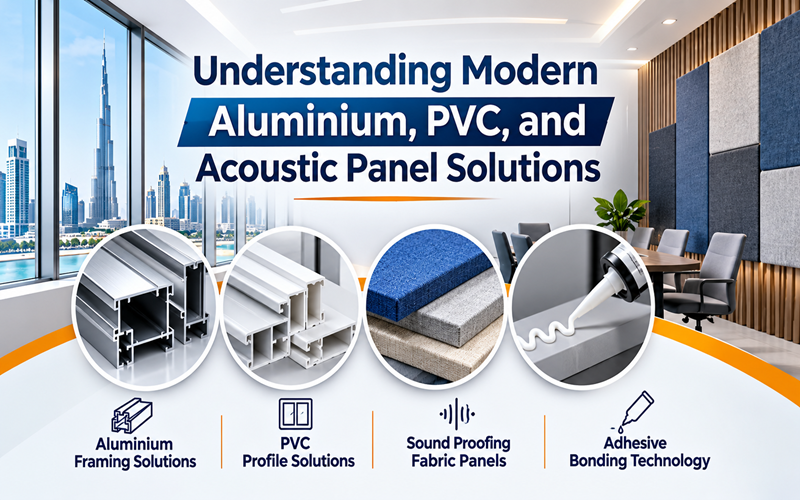
Modern construction, interior design, and industrial manufacturing increasingly depend on materials that offer durability, flexibility, and efficient performance. Aluminium framing systems, PVC profiles, acoustic fabric panels, and advanced bonding technologies play important roles in residential, commercial, and industrial applications.
Choosing suitable materials requires an understanding of their properties, applications, installation requirements, and long-term benefits. Businesses and professionals working across the UAE construction and manufacturing sectors can make better decisions by evaluating these factors before selecting materials for their projects.
- Choosing a Reliable Aluminium Frame Supplier in Sharjah
Aluminium is widely used in construction and interior applications because of its lightweight structure, corrosion resistance, and strength. It is suitable for applications such as windows, doors, partitions, commercial structures, and architectural framing systems.
When looking for an Aluminium Frame Supplier Sharjah, buyers should consider several important factors:
- Material quality: Check the aluminium grade and thickness according to project requirements.
- Surface finishing: Consider powder coating, anodizing, and other protective finishes.
- Dimensional accuracy: Ensure profiles meet the required measurements and specifications.
- Corrosion resistance: Select suitable finishes for the UAE’s environmental conditions.
- Application suitability: Confirm that the framing system supports the intended structural or decorative purpose.
Working with appropriate aluminium specifications can improve structural performance, reduce maintenance requirements, and support long-term reliability.
- Understanding Sound Proofing Fabric Panels in Dubai
Noise management is an important consideration in modern offices, educational institutions, hospitality spaces, and commercial buildings. Excessive noise can affect concentration, communication, and overall comfort.
Sound Proofing Fabric Panels Dubai is a relevant consideration for projects that require better acoustic conditions. Fabric-covered acoustic panels are commonly designed to absorb sound reflections and reduce echo within indoor environments.
Where Are Acoustic Fabric Panels Used?
These panels are suitable for various environments, including:
- Corporate offices and meeting rooms.
- Conference halls and auditoriums.
- Hotels and hospitality spaces.
- Educational institutions.
- Recording studios and entertainment areas.
Factors to Consider Before Installation
The effectiveness of acoustic panels depends on their material composition, thickness, placement, and sound absorption characteristics. Buyers should evaluate acoustic performance ratings, fabric durability, maintenance requirements, and fire safety specifications.
It is also important to understand the difference between sound absorption and sound insulation. Acoustic panels primarily reduce reflected sound within a room, while sound insulation focuses on limiting noise transmission between spaces.
- Applications of PVC Profiles in UAE Construction
PVC profiles are commonly used in building and interior applications because of their versatility, moisture resistance, and relatively low maintenance requirements.
A dependable PVC profiles supplier in UAE should provide products that meet the technical and dimensional requirements of different projects.
Common applications include:
- Window and door framing systems.
- Interior finishing and decorative sections.
- Cable management and protective channels.
- Construction joints and edge protection.
- Industrial and commercial installations.
Important PVC Profile Selection Criteria
Before choosing PVC profiles, consider material consistency, dimensional stability, UV resistance, mechanical properties, and compatibility with the intended installation.
In the UAE, temperature exposure and sunlight are particularly important considerations. Selecting suitable formulations and specifications can help maintain product performance over time.
- Exploring Adhesive Bonding Technology in Modern Manufacturing
Traditional mechanical fastening methods, such as screws, bolts, and rivets, are widely used in manufacturing. However, modern production processes increasingly incorporate adhesive solutions for applications requiring uniform bonding and improved design flexibility.
Adhesive Bonding Technology uses specialized adhesives to join different materials through controlled surface preparation, application, and curing processes.
Its important advantages include:
- Distributing stress across a larger bonding area.
- Joining different material combinations.
- Reducing the need for visible mechanical fasteners.
- Supporting lightweight product designs.
- Providing flexibility in manufacturing and assembly.
The appropriate adhesive depends on substrate materials, operating temperatures, moisture exposure, and mechanical loading conditions.
- Understanding Adhesive Bonding Manufacturing Processes
Adhesive Bonding Manufacturing involves several controlled stages to achieve consistent and reliable joints.
Key Manufacturing Stages
- Surface preparation: Clean surfaces to remove dust, grease, moisture, and contaminants.
- Adhesive selection: Choose an adhesive compatible with the materials and operating environment.
- Application: Apply the correct quantity using an appropriate method.
- Assembly: Position and align components before the adhesive begins setting.
- Curing: Allow sufficient time under recommended temperature and environmental conditions.
- Quality inspection: Evaluate bond strength, consistency, and overall joint performance.
Maintaining consistent manufacturing conditions is essential for minimizing defects and achieving dependable results.
Frequently Asked Questions (FAQs)
- What are the main benefits of aluminium framing systems?
Aluminium frames offer strength, lightweight construction, corrosion resistance, and design flexibility for residential and commercial applications.
- Where are soundproofing fabric panels commonly installed?
They are commonly used in offices, conference rooms, auditoriums, educational facilities, and recording studios to reduce echo and improve acoustic comfort.
- What should buyers consider when selecting PVC profiles in the UAE?
Important factors include material quality, dimensional accuracy, UV resistance, temperature suitability, and intended application.
- What is adhesive bonding technology?
It is a joining process that uses specialized adhesives to connect materials without relying entirely on traditional mechanical fasteners.
- Why is surface preparation important in adhesive bonding manufacturing?
Proper preparation removes contaminants and improves adhesive contact, helping achieve stronger and more consistent bonds.
Conclusion
Selecting appropriate construction and manufacturing materials requires careful attention to technical specifications, environmental conditions, and application requirements. Aluminium framing, PVC profiles, acoustic fabric panels, and adhesive bonding solutions each serve different purposes across modern industries. Understanding their properties and installation processes helps professionals make informed decisions, improve product performance, and support durable, efficient project outcomes across the UAE.
Related posts